Choosing a composite door: A buyer’s checklist for security, insulation, and style
- 15 Jun 2026|
- Doors|
- Posted by homeguard_admin
Choosing a composite door comes down to five things: construction quality, security certification, thermal performance, colour and style, and the guarantee behind it. Get those five right and your front door will perform well for 30 years or more. Miss one and you may pay the price in draughts, failed locks, or a faded finish.
This checklist covers every specification that genuinely matters, so you can buy your new composite door with confidence.
What is a composite door and why do UK homeowners choose them?
A composite door is built from multiple materials bonded together: a GRP (glass-reinforced plastic) outer skin, a solid timber or high-density foam core, a rigid uPVC or aluminium sub-frame, and a multipoint locking system. No single material does all the work; each layer adds to the whole.
Compared to a standard uPVC door, a composite door is heavier, more rigid, and harder to force open. The GRP skin resists impact, weather, and UV fading while the insulated core maintains structural integrity through seasonal temperature swings. The result is a door that feels and performs like a premium product over its entire lifespan.
Understanding GRP skin construction
The outer skin is the part of a composite door most homeowners notice first, and it does far more than look good.
GRP (glass-reinforced plastic) is a high-impact resistant material used to strengthen the door slab and protect against fading, peeling, and warping. The same material is used to reinforce boat hulls, which tells you something about its weather resistance.
A quality GRP skin is typically 2mm thick and available in smooth or woodgrain finishes. The woodgrain texture is moulded directly into the skin, so it replicates the look of a painted timber door without any of the maintenance. You never need to sand, stain, or repaint a GRP composite door. A wipe with a damp cloth keeps it looking new.
The skin also locks in colour. Unlike uPVC, which can develop a chalky surface bloom over years of sun exposure, a well-made GRP composite door retains its colour for decades.
Security standards: what PAS 24 actually means
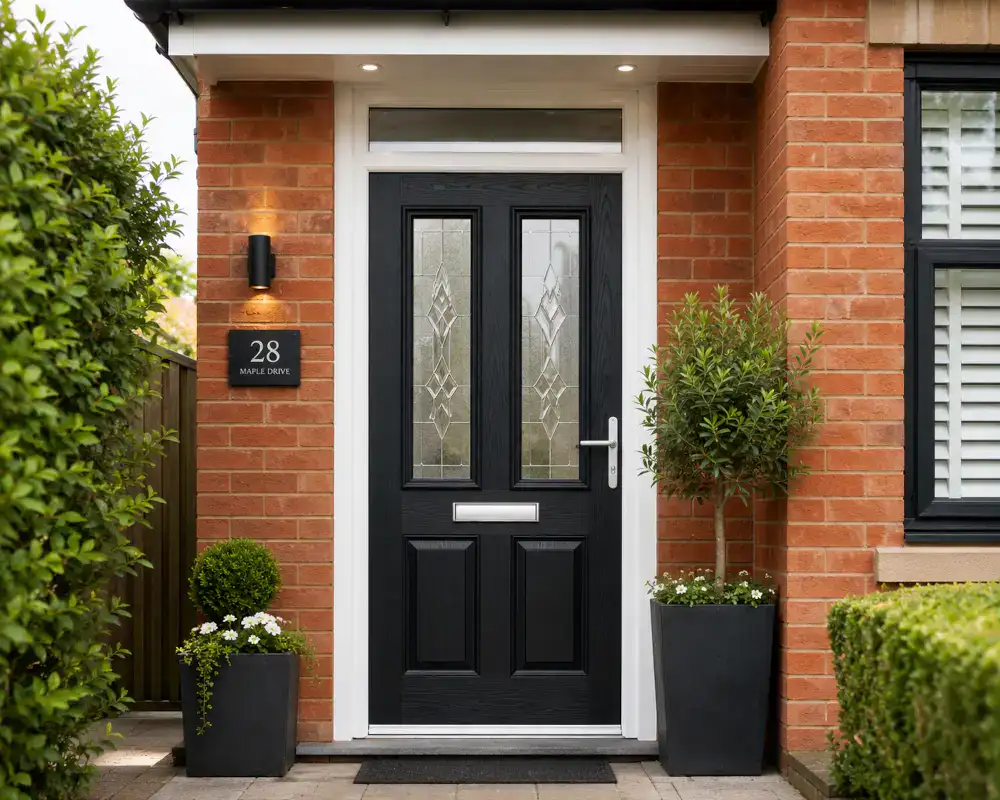
PAS 24 is the UK’s recognised security performance standard for external doorsets. It is a pass-or-fail test, not a grading system. A door either meets the criteria or it does not.
PAS 24 assesses how a complete doorset performs under real-world attack methods, rather than testing individual components in isolation. That distinction matters because security depends on how the slab, frame, hardware, and locking all work together once installed.
Secured by Design (SBD) is a separate police-backed certification scheme that uses PAS 24 as a baseline but adds further requirements, including a TS 007 3-star anti-snap cylinder, 10mm hinge bolts, and a steel letterbox plate with an anti-intruder baffle.
Thermal performance: U-values explained simply
A door’s U-value measures how much heat passes through it. The lower the number, the better the insulation.
A foam-filled GRP composite door will typically sit between 1.0 and 1.4 W/m²K. A timber-core door with a high-density foam layer can reach as low as 0.8 W/m²K with the right configuration.
When comparing quotes, always ask for the U-value of the specific door leaf rather than the doorset as a whole. Frame performance varies and the leaf figure gives you the most accurate comparison.
Core construction: timber vs foam, and why it matters
The door’s core determines its weight, rigidity, and insulation performance. There are two main types.
Timber core: A solid engineered timber centre, sometimes cross-laminated, gives the door a substantial feel and high structural strength. It is the heavier option and tends to perform well in security testing.
Polyurethane foam core: A high-density foam fill provides excellent thermal performance and is lighter than timber. The GRP skin carries the structural load. Foam cores often achieve better U-values than timber cores.
Composite doors feature a solid timber or foam core for immense strength, and both are valid choices. The right option depends on your priorities. If thermal efficiency is the primary concern, a foam core with a quality GRP skin is worth specifying. If you want the heaviest, most solid-feeling door, a timber core may suit better.
At HomeGuard, we supply composite doors from Universal Composite Doors, a manufacturer offering your choice of foam or timber core with a 10-year guarantee and 40+ styles across hundreds of colour combinations.
Choosing the right style for your home
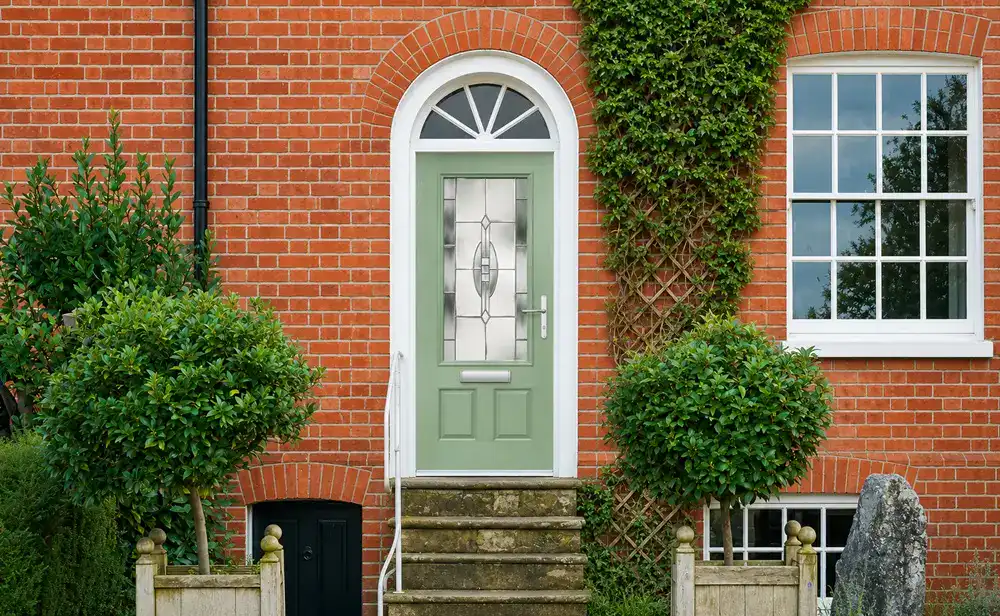
Choosing a composite door is also a design decision. The front door is the first thing you and your visitors see, and it sets the character of the whole property.
Style choices broadly fall into two categories:
Classic shades and traditional designs
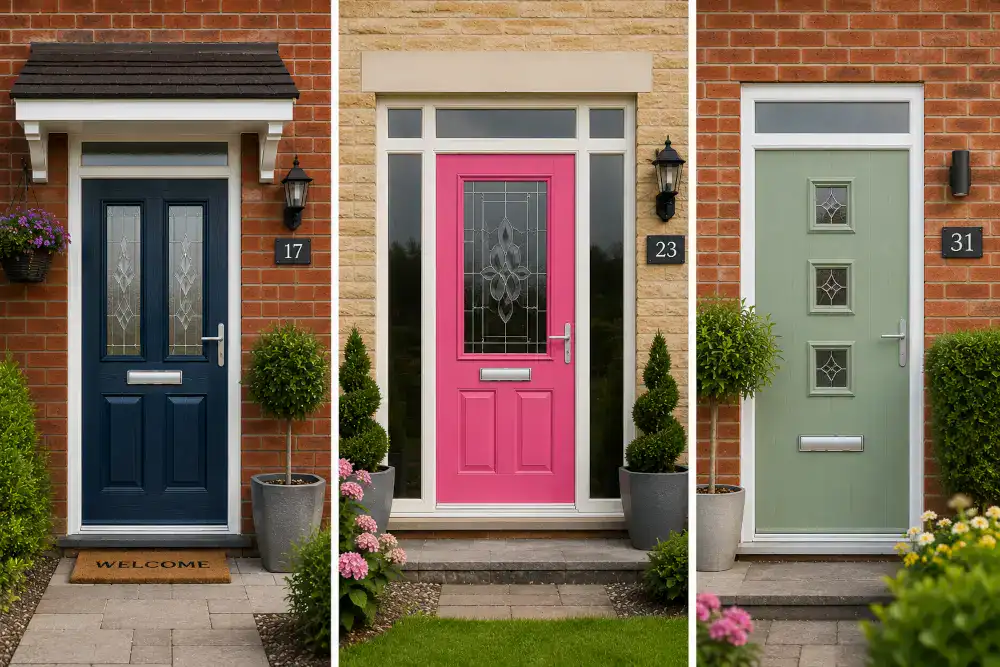
Woodgrain finishes in colours like chartwell green, golden oak, and rosewood suit period and semi-detached homes where you want the look of timber without the upkeep. These classic shades complement brick facades, bay windows, and traditional hardware like chrome lever handles or a period knocker.
Bold colours and contemporary looks
Anthracite grey is currently the most popular composite door colour in the UK, and for good reason. It works across a wide range of property types, reads as both modern and timeless, and holds its look well with darker brickwork. Midnight black delivers a similar bold statement, particularly effective on rendered homes. Blues in duck egg or navy add personality to coastal or cottage-style homes without feeling forced.
If your home is painted or rendered rather than brick, you have more flexibility to go bold. If your exterior is red or yellow stock brick, sticking to neutral greys, greens, or natural woodgrains tends to age better over time.
HomeGuard’s composite door collection offers hundreds of colours, materials, glass options, and hardware choices, covering both timeless traditional designs and sleek contemporary styles.
Guarantees and what they should actually cover
A 10-year guarantee is the benchmark in the composite door market. But the wording matters more than the number.
Ask your installer to confirm:
- Does the guarantee cover the door slab, frame, hardware, and glass?
- Is it an insurance-backed guarantee, or just the installer’s own promise?
- What happens if the installer ceases trading?
- Does it cover accidental warping or paint delamination?
An insurance-backed guarantee protects you even if the company you bought from is no longer in business. This is worth asking about specifically, particularly when buying from a smaller local firm.
At HomeGuard, we back every installation with a comprehensive guarantee and ongoing aftercare support. HomeGuard is a proud member of TrustMark, FENSA, and LABC, which confirms that every installation meets rigorous industry standards and is properly notified under Building Regulations.
Maintenance: what composite doors actually need
Very little. That is genuinely one of the strongest arguments for choosing a composite door over painted timber.
- Clean with warm soapy water and a soft cloth; avoid abrasive cleaners
- Lubricate the multipoint lock mechanism once a year with a dry or light oil lubricant
- Check seals annually for any compression loss, particularly at the threshold
- Avoid dark-coloured doors on south-facing elevations in full sun without checking the manufacturer’s specification; surface temperatures can reach 60-70°C and may affect some slab warranties
Beyond that, a quality composite door asks very little of you for 30 years or more.
Ready to choose your composite door? View HomeGuard’s composite door range or get a free no-obligation quote from our team in Buckinghamshire. We cover Aylesbury, High Wycombe, Milton Keynes, and the wider Home Counties.